

The Basics of Connected TV
Connected TV is TV connected over the Internet. This would be as opposed to cable TV—connected over proprietary cable networks—and Free-to-Air, which is the traditional broadcast TV captured by an antenna.
there is a wide diversity of hardware devices that support Connected TV. Many of these Set-Top Box devices are based on the Android operating system, but most are still proprietary hardware.
Many are provided by the vendor that provides and owns the viewing platform, and therefore the home screen. An example would be Apple TV:they allow the Netflix platform, but they own the home screen of the device, and any additional apps are downloaded via the Apple App Store. Although they offer third-party channels and apps, they command 100% of the advertising revenue.
Roku currently holds the largest share of Connected TV in the U.S. market, followed by Amazon Fire TV, Samsung Smart TV and Android TV.
FAST TV (Free Ad-Supported Streaming Television)
What it is
Think of it like traditional TV but streamed over the internet.
How it works
You tune into channels that are always running (linear streams).
You don’t choose individual shows on demand; instead, you watch what’s playing right now on the channel.
Example platforms
- Pluto TV.
- Xumo.
- Samsung TV Plus.
Key Characteristics
- Live or linear-style streams.
- Feels like cable/satellite TV but free and online.
- Funded by ads (no subscription fees).
AVOD (Ad-Supported Video-On-Demand)
What it is
Like Netflix, but free with ads
How it works
You choose exactly what to watch (on-demand: movies, shows, etc.). Ads play before, during, or after the content (pre-roll, mid-roll, post-roll).
Example platforms
- Tubi.
- Peacock (free tier).
- YouTube (non-premium).
Key Characteristics
- On-demand viewing with advertising.
- You control what and when you watch.
In a Nutshell
| Feature | Fast TV | AVOD |
|---|---|---|
| Viewing Style Linear | Channel-based On-demand | User selects titles |
| Content Control | Watch what’s airing now | Pick and play anytime |
| Examples | Pluto TV, Xumo | Tubi, Freevee, YouTube |
| Ads | Yes, during live stream | Yes, integrated into on-demand content |
Advertising
In TV, radio, and streaming, a collection of Ads grouped together in a commercial break is called a pod. Each Ad pod can contain several individual ad slots, which advertisers fill.
TV Ads Still Lead Consumer Influence
According to Statista, 53% of U.S. adults consider TV ads, including those on ad-supported streaming platforms, the most influential in shaping their purchase decisions, viewing habits, and dining choices.
TV ads still remain the most powerful persuasive to influence purchasing decision decisions compared to other kind of digital advertising such as social media and web browsing. 53% of adult adults say consider ads including those on connected TV platforms streaming, to be the most influential for the purchasing decisions, viewing habits and dining choices – Source CivicScience
The Increased shift towards digital streaming, including connected TV, reflect audience is shift to streaming. In the USA for example viewers watched 19 million year’s worth of streaming in 2022. As a result, advertises are putting their money where their audience is.
Marketing and advertising agencies Zenith forecasts that video ad spending will increase by 4.8% to represent 30% of total advertising spent by 2025. Well aware of the transition to streaming, 40% to 59% of Global marketers are adjusting their advertising spend worldwide to CTV. And nearly 1/5 ((19%) report moving 70% of their advertising spend streaming.
Viewing Analytics
Advertising SSAI Platform Use Cases
- Live Sports Streaming
Inserting targeted ads during breaks in live games without disrupting the viewing flow. - OTT (Over-the-The-Top) Platforms
Delivering seamless ad experiences in on-demand movies and TV shows. - FAST (Free Ad-Supported Streaming TV) Channels
Monetizing linear streaming channels with integrated advertising. - Video Content Creators
Implementing server-side ads on their own websites or platforms for better monetization. - E-commerce Live Streaming
Integrating shoppable ads directly into live shopping events. - News Broadcasting
Inserting relevant ads during live news coverage without interrupting the flow of information.
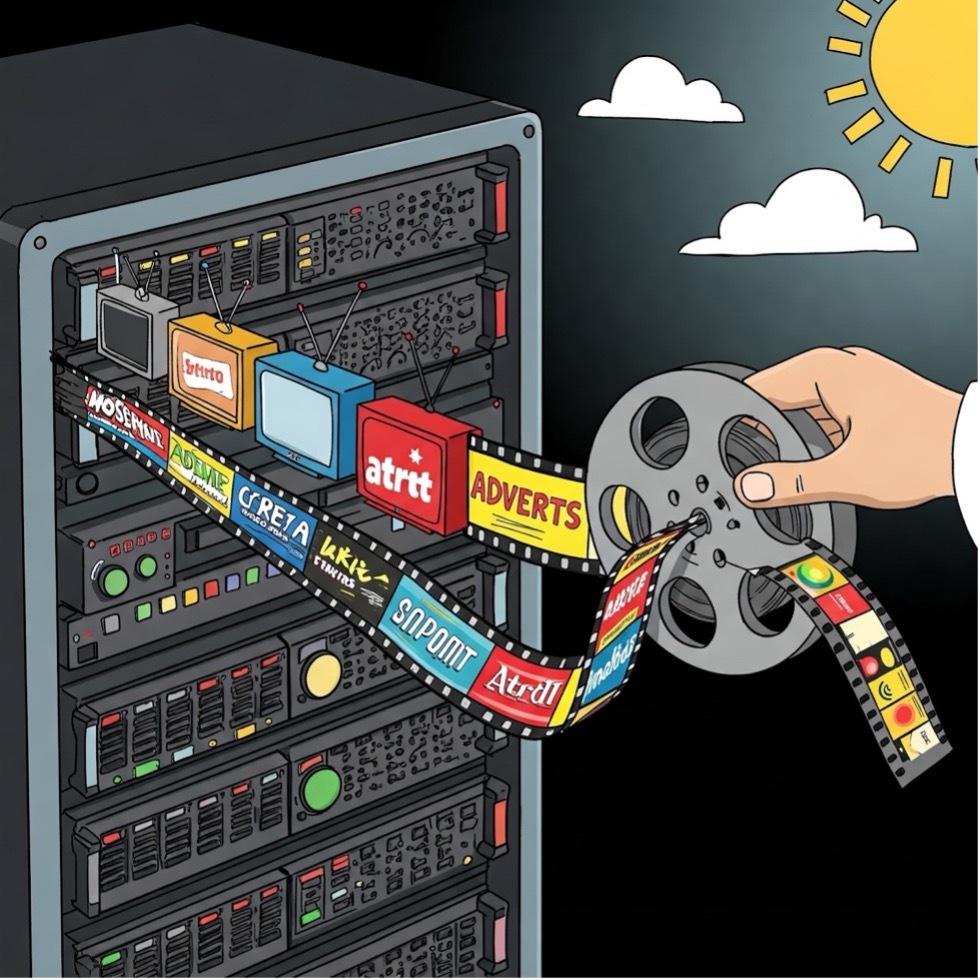

Slow TV Channels: A Different Pace of Television
Slow TV is a unique genre of television programming that breaks away from the fast-paced, highly edited style of most modern TV. Instead of quick cuts and dramatic narratives, Slow TV presents viewers with extended, often real-time coverage of ordinary events.
Key Characteristics
- Long Duration
Slow TV programs can run for hours, sometimes even days. - Real-Time or Near Real-Time
Events unfold at their natural pace. - Minimal Editing
There’s little to no editing, narration, or added drama. - Focus on the Ordinary
Subjects can range from scenic journeys (train rides, boat trips) to processes (knitting, chopping wood) or natural events. - Emphasis on Immersion and Atmosphere
Slow TV aims to create a meditative and immersive viewing experience.
Origins and Popularity
Slow TV gained prominence in Norway, where the Norwegian Broadcasting Corporation (NRK) pioneered the genre. Their broadcast of a 7-hour train journey, “Bergensbanen minute by minute,” in 2009, is often cited as a key moment in the development of Slow TV.
Examples of Slow TV Content
- Journeys: Train rides, boat voyages, road trips.
- Processes: Knitting, wood chopping, the making of an object.
- Natural Events: Sunrise, the changing of seasons.
- Everyday Activities: Watching a fire burn, sheep grazing.
Purpose and Appeal
Slow TV offers a contrast to the frenetic pace of modern life and media. It can provide:
- Relaxation and Calm: The long, uneventful format can be soothing and meditative.
- A Sense of Presence: Slow TV allows viewers to immerse themselves in a particular experience or environment.
- A Different Perspective: It encourages viewers to observe and appreciate the details of the ordinary.
- A Connection to Place or Process: It can foster a deeper connection to a location, journey, or activity.
Slow TV is credited with increasing connectedness with an a community. While it may seem unconventional, Slow TV has found an audience seeking a more contemplative and immersive viewing experience.