
OCOM/EOM Adds Analysis over HTTPS Interface, Starting with STIR/SHAKEN
As part of Oracle’s continued deep investment into OCOM/EOM, release 6 has some very nice features which we shall be highlighting over the next few weeks.
My favorite from this latest batch is the analysis of STIR/SHAKEN. Here OCOM/EOM analyses the HTTPS request northbound from the SBC as well as the SIP headers.
This is interesting because it gives one a little clue as to where Oracle might be going with future developments on OCOM/EOM despite never publishing a roadmap.
Note: this link is always TLS encrypted, so use your SBC to decrypt this HTTPS leg or talk to Teraquant about a decryption tap.
If you have an Oracle SBC, use that as a probe to pipe the captured packets directly to your OCOM/EOM mediation engine.
You can then troubleshoot the connection with your Authenticating Service (STI-AS) and STI-Verification Server (STI-VS) services.
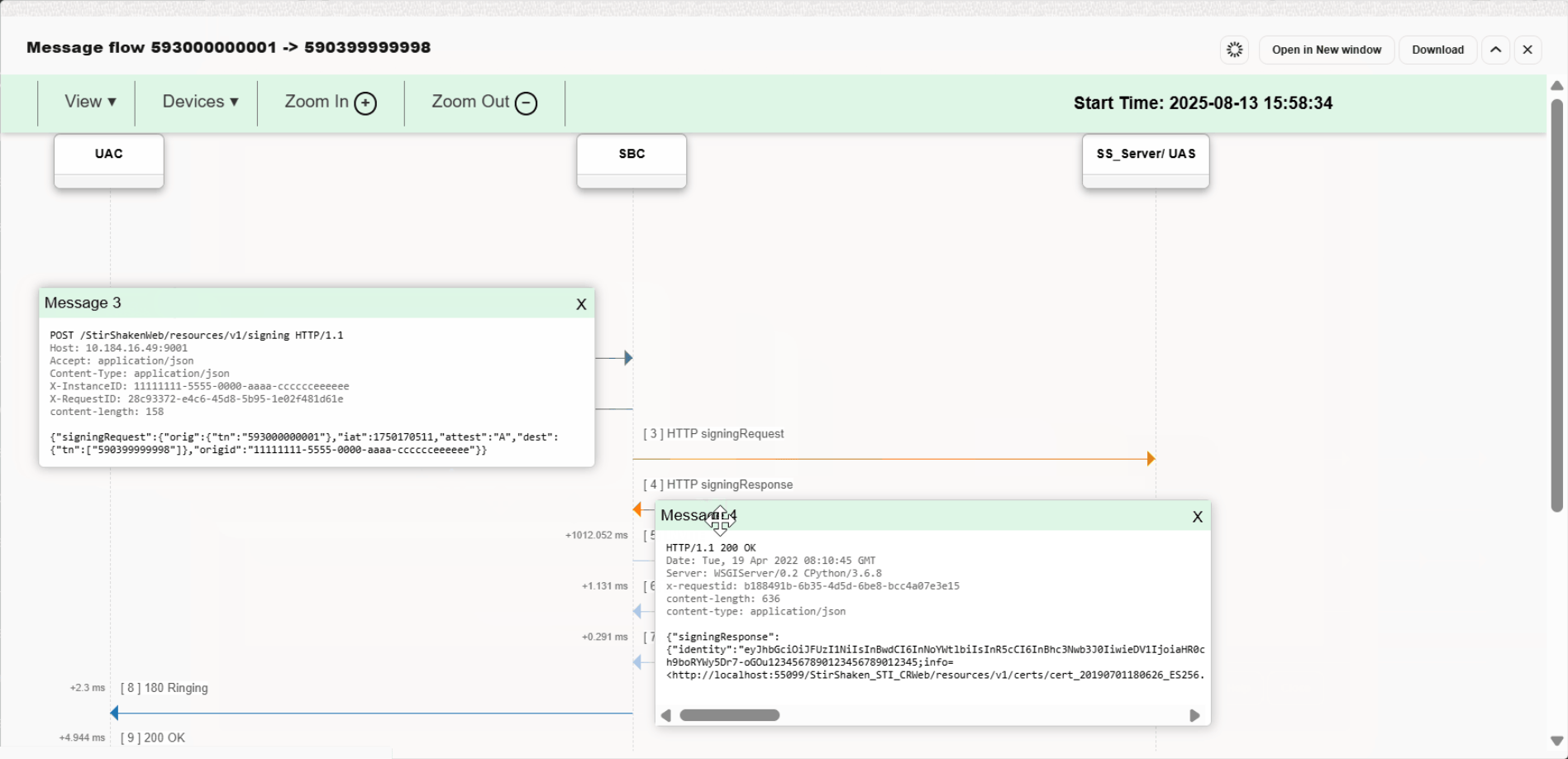
Technical benefits include being able to check that the Signing Response inserted in the SIP header directly corresponds to the information coming from your STI-AS and STI-VS
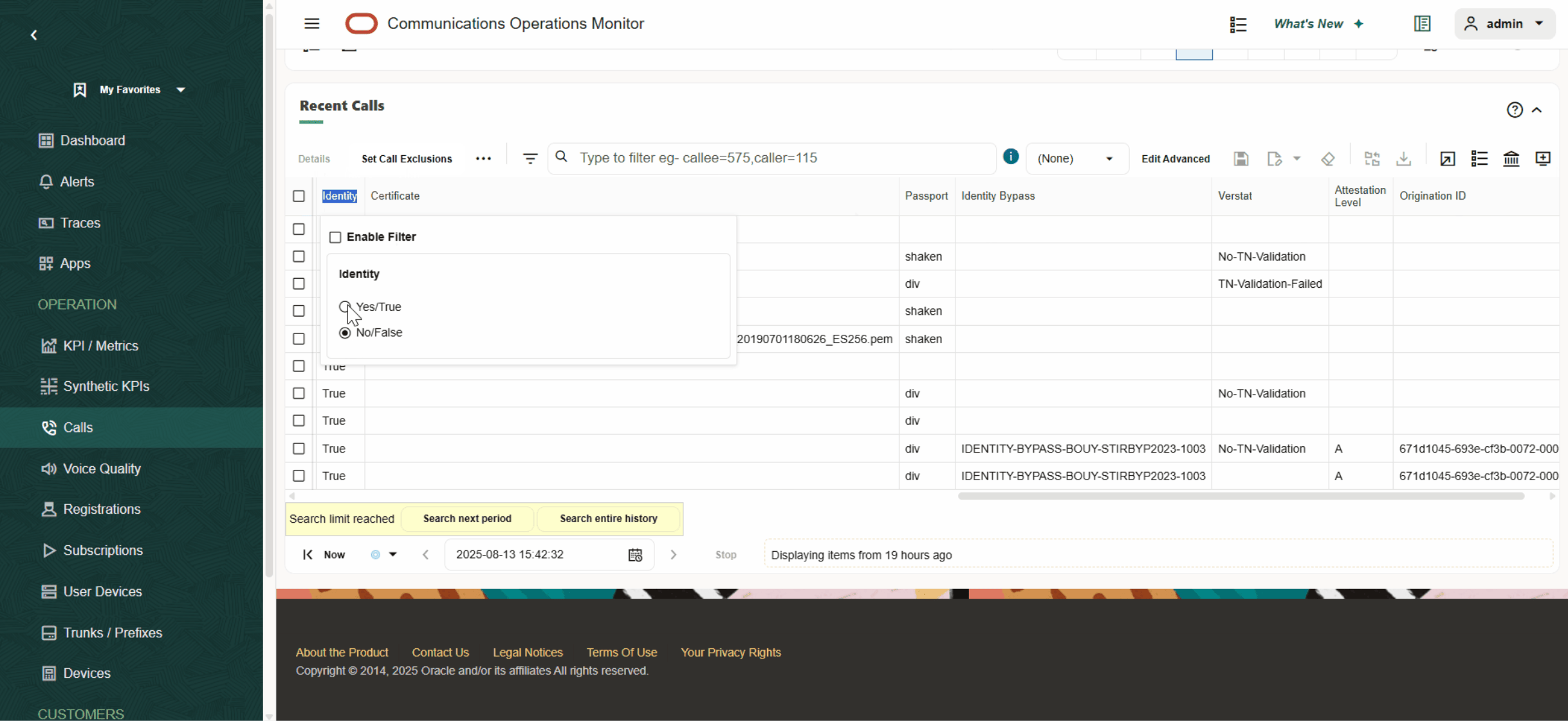
This extensive functionality in OCOM/EOM allows you to filter on all the important S/S headers to isolate your issue at hand.
Here’s a refresher on all the key S/S headers so you know what to filter in using OCOM/EOM
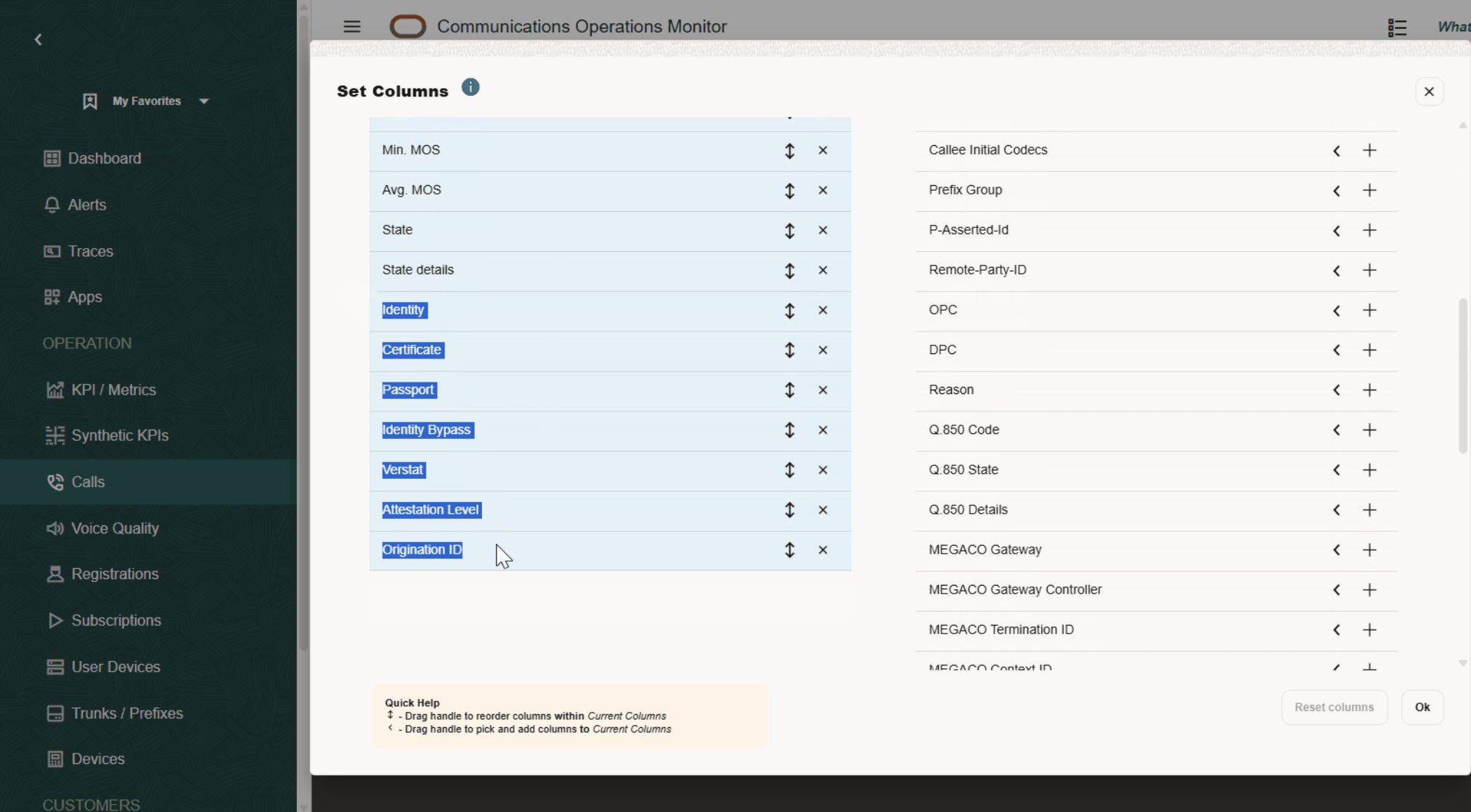
Identity Header
The Identity Header contains the S/S Token called the PASSporT which tells you which call is being certified and where to get the certificate for verification.
PASSporT Payload: Contains the actual call claims, including:
- orig: The calling telephone number.
- dest: The destination (called) telephone number(s).
- iat: The “issued-at” timestamp (Unix time).
- attest: The attestation level (A, B, or C).
- origid: A unique ID for traceback.
As well as the PASSporT, the SIP Identity header contains the following supplementary information:
- info: Repeats the URL link to the certificate (matching the x5u in the PASSporT).
- alg: Repeats the algorithm (ES256).
- ppt: repeats the extension type (shaken).
Sample Plain Text Header
{
“alg”: “ES256”,
“ppt”: “shaken”,
“typ”: “passport”,
“x5u”: “https://certificates.clearip.com/b15d7cc9-0f26-46c2-83ea-a3e63a82ec3a/7cc4db695d13edada4d1f9861b9b80fe.crt”
}
Sample Plain text Payload
“attest”: “A”
“dest”: { “tn”: [ “7654423282 ” ] }
“iat”: 1529071382
“orig”: { “tn”: ” 8609653208 ” }
“origid”: “4aec94e2-508c-4c1c-907b-3737bac0a80e” }
P-Identity-Bypass Header
The P-Identity-Bypass header is a specialized SIP header used primarily in Europe (specifically in France) to manage the “disengagement” or exclusion of a call from the standard STIR/SHAKEN signing process.
- Instruction to Ignore Identity: If a SIP INVITE contains both an Identity header and a P-Identity-Bypass header, the bypass header serves as an instruction to downstream operators to ignore the Identity header entirely.
- We don’t use P-Identity-Bypass in North America
S/S Certificate
The S/S Certificate certifies the identity of the originating service provider (the carrier) and their right to participate in the trusted STIR/SHAKEN ecosystem.
PASSporT
The Payload of the PASSporT Contains the actual call claims, including:
- orig: The calling telephone number.
- dest: The destination (called) telephone number(s).
- iat: The “issued-at” timestamp (Unix time).
- attest: The attestation level (A, strong, or C).
- origid: A unique ID for traceback.
Attestation Level
The PASSporT (Personal Assertion Token) within the Identity header contains the attestation. But this can also be filtered on specifically using this filter
Origination ID
Similarly there is a shorthand to filter on the origid
The Verstat
Once the call has traversed the network from the originating carrier, on reaching the terminating carrier, their SBC needs to verify 3 things which are displayed in clear readable format in the received SIP INVITE in the Verstat.
the 3 things the Verstat shows are:
- Signature Validity: It confirms that the digital signature in the PASSporT has not been tampered with and was signed by a legitimate certificate authority.
- Number Authenticity: It verifies that the “From” number in the SIP INVITE matches the number contained inside the encrypted PASSporT payload.
- Trust (Attestation) Level: It conveys the level of confidence (A, B, or C) that the originating carrier has in the caller’s right to use that number.
Sample API response from STI- VS to SBC
• HTTP/1.1 200 OK
• X-Span-ID: ..
• Content-Type: application/json
• Date: …
• X-Msw-Message-ID:
{
“verificationResponse”:{
“attest”: “A”
“origid”: “4aec94e2-508c-4c1c-907b-3737bac0a80e
“ppt”: “shaken”
“verstat”: “TN-Validation-Passed”
}
If you would like to know more about the subjects in this article, please get in touch as below.
For more information, view:
SIP Monitoring VoIP for Telco CSPs